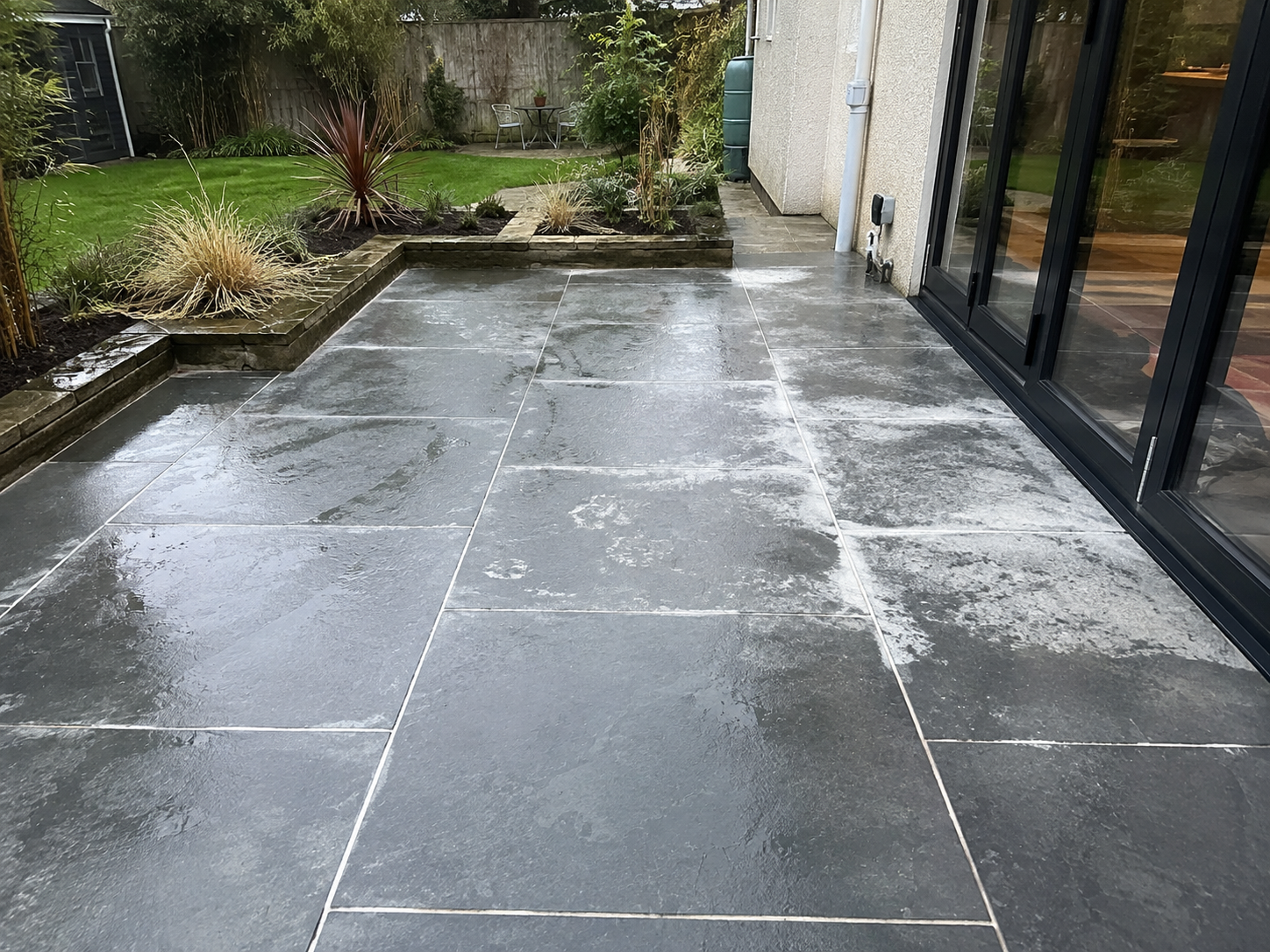
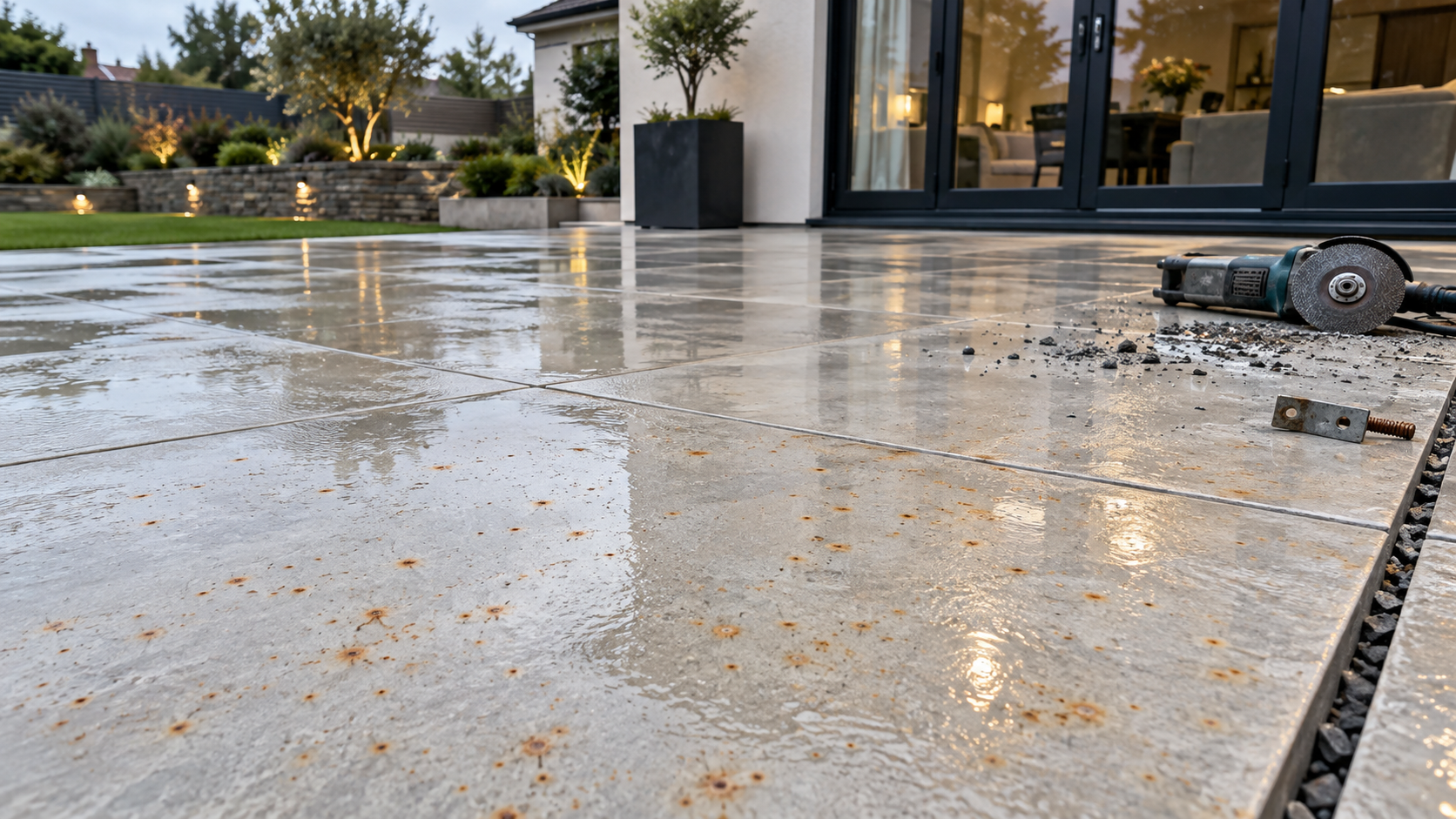
The Rust Freckles: Why Your New Porcelain Patio is Turning Orange
Tiny orange spots appearing across your new grey porcelain? The slabs probably aren't rusting. Metal contamination, tools, furniture and even lawn treatments can leave rust marks once Bournemouth rain gets involved.
You've paid good money for pale grey porcelain.
Looks spotless when the job's finished.
Then a few weeks of Bournemouth rain arrive and tiny orange spots start appearing across the slabs.
You scrub them.
Nothing.
Pressure washer comes out.
Still there.
First thought?
The porcelain must be rusting.
Usually, it isn't.
Something containing iron has been left on that surface, and the rain has grassed it up.
Porcelain Doesn't Suddenly Turn Into Rust
Porcelain is incredibly dense and doesn't contain a lump of steel hidden inside waiting to go orange.
But it can still get rust stains on the surface.
During construction you've got grinders, tools, screws, brackets and all sorts being moved around the garden. Tiny bits of metal contamination can end up where they shouldn't.
After the job, you've got BBQs, furniture, plant stands and other metalwork sitting outside in the rain.
Even some lawn treatments and fertilisers contain iron compounds capable of leaving little rust-coloured spots if they get onto the paving.
Add water and oxygen.
The iron oxidises.
Now your expensive grey porcelain has orange freckles all over it.
The Grinder Doesn't Belong Over the Finished Patio
This is where working clean matters.
You've got somebody cutting steel nearby while sparks and tiny metal particles are landing across finished paving.
Looks harmless.
Half of it is practically dust.
Then it gets wet.
Those tiny particles start corroding and suddenly you've got spots appearing across slabs that were immaculate when the landscaper packed his tools away.
That's why we don't treat finished paving like a workshop floor.
Once the porcelain is down, you protect it.
Cut and grind in sensible areas. Clean up properly. Don't leave rusty screws, tools and bits of metal sitting across a patio overnight in the rain.
Basic stuff.
Until somebody doesn't do it.
Don't Chuck Random Acid Over It
This is where a small problem can become an expensive one.
Homeowner sees rust.
Googles patio cleaner.
Buys something aggressive and pours it everywhere.
Bad idea.
Different paving materials and surrounding jointing products react differently to chemicals. Even where the porcelain itself is resistant, the stuff around it might not be.
Rust also isn't ordinary dirt. A pressure washer and washing-up liquid aren't necessarily going to shift it.
First work out what the stain actually is and where it's coming from.
Then use a suitable specialist product for that surface, following the manufacturer's instructions and testing it somewhere inconspicuous first.
Don't start playing chemist across ten grand's worth of paving.
Expensive Paving Still Needs Looking After
This is the same lesson we keep seeing with premium landscaping.
Buying expensive materials doesn't protect you from sloppy workmanship.
Porcelain is tough. That's one reason we use it.
But if somebody showers it in metal filings, leaves rusty tools across it or contaminates it during the rest of the build, the slab can't stop that happening.
Good landscaping isn't just laying the porcelain straight.
It's protecting the finished work while everything else is still going on around it.
Because nobody wants to spend thousands on a brand-new patio and spend the first summer staring at little orange dots wondering what the hell went wrong.
Stop letting cheap builders ruin your property. Pop down and see the lads at 78 Alma Rd, Bournemouth BH9 1AN, UK, or ring the site phone on 07840 151036.
Related Topics & Services: Greenway Poole Ltd • GW Landscaping • Architectural Landscaping Poole • Luxury Porcelain Patios Dorset • Garden Design Sandbanks & Canford Cliffs • Bespoke Outdoor Living Dorset