The Shed Roof Trap: Why Cheap Felt Tears Off (And Why We Use EPDM)
Is your garden office ready for a coastal storm? Discover why cheap felt roofs rip off in the wind, and why seamless EPDM rubber is the only way to guarantee a leak-proof studio.
It happens every single November without fail. The first proper winter gale rolls in off the coast and batters Dorset.
The next morning, the site phone starts ringing. Someone spent eight grand on a posh wooden shed from the internet. They set it up as a home office, moved all their expensive monitors and laptops in, and woke up to water dripping straight onto the desk.
They look out the window and see half their roof flapping around in the neighbour’s tree.
If you want a windproof garden studio in Dorset, you have to look right at the top of the build. Here is why standard garden studio roof materials will eventually ruin everything inside.
The Clout Nail Joke
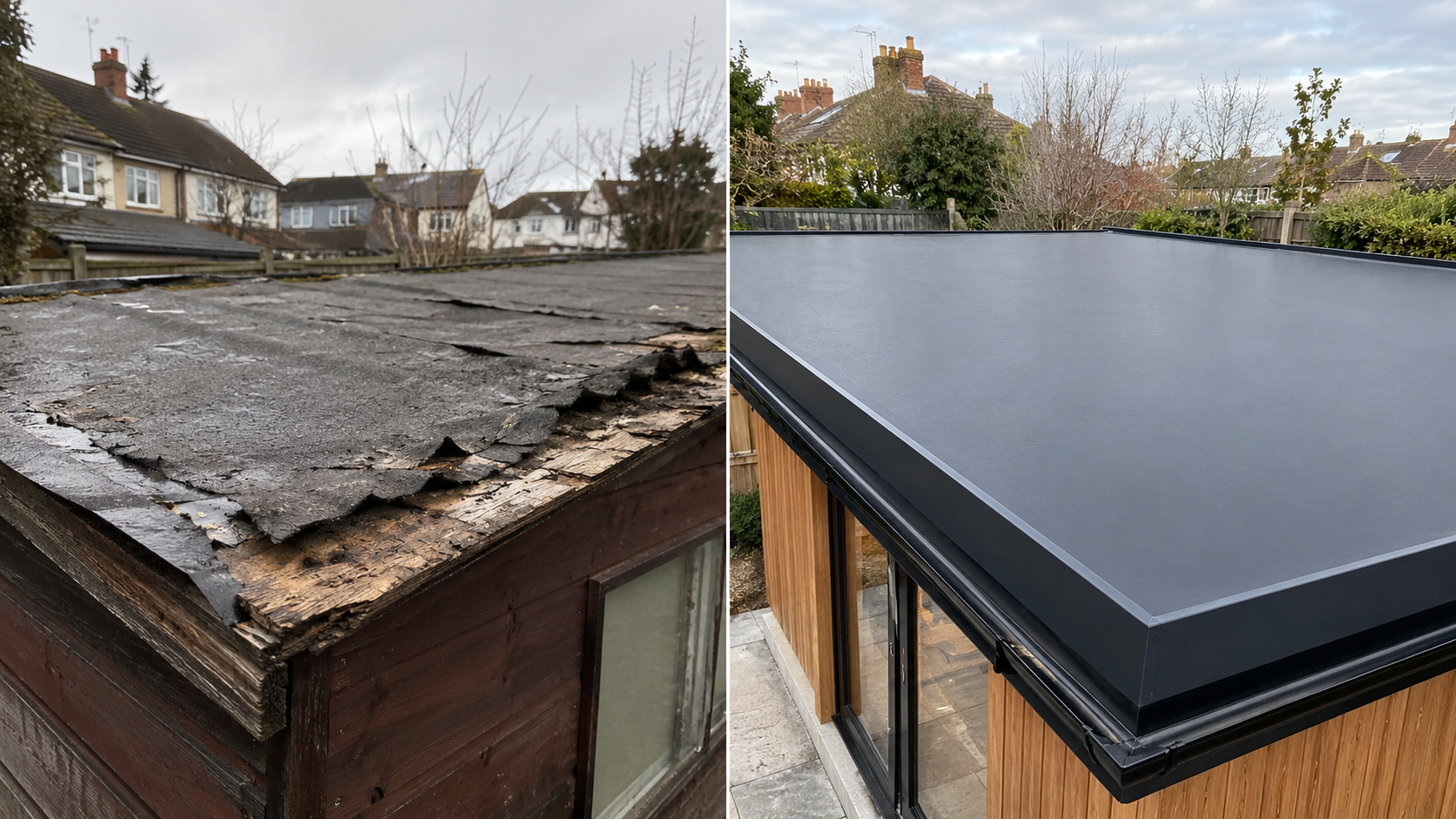
Most garden rooms on the market use standard roofing felt. It’s basically just thick paper dipped in cheap tar and covered in grit.
The bloke building it just unrolls a few strips over the timber, overlaps them, and bashes them down with a handful of small clout nails. It is a completely useless way to weatherproof a flat roof garden office.
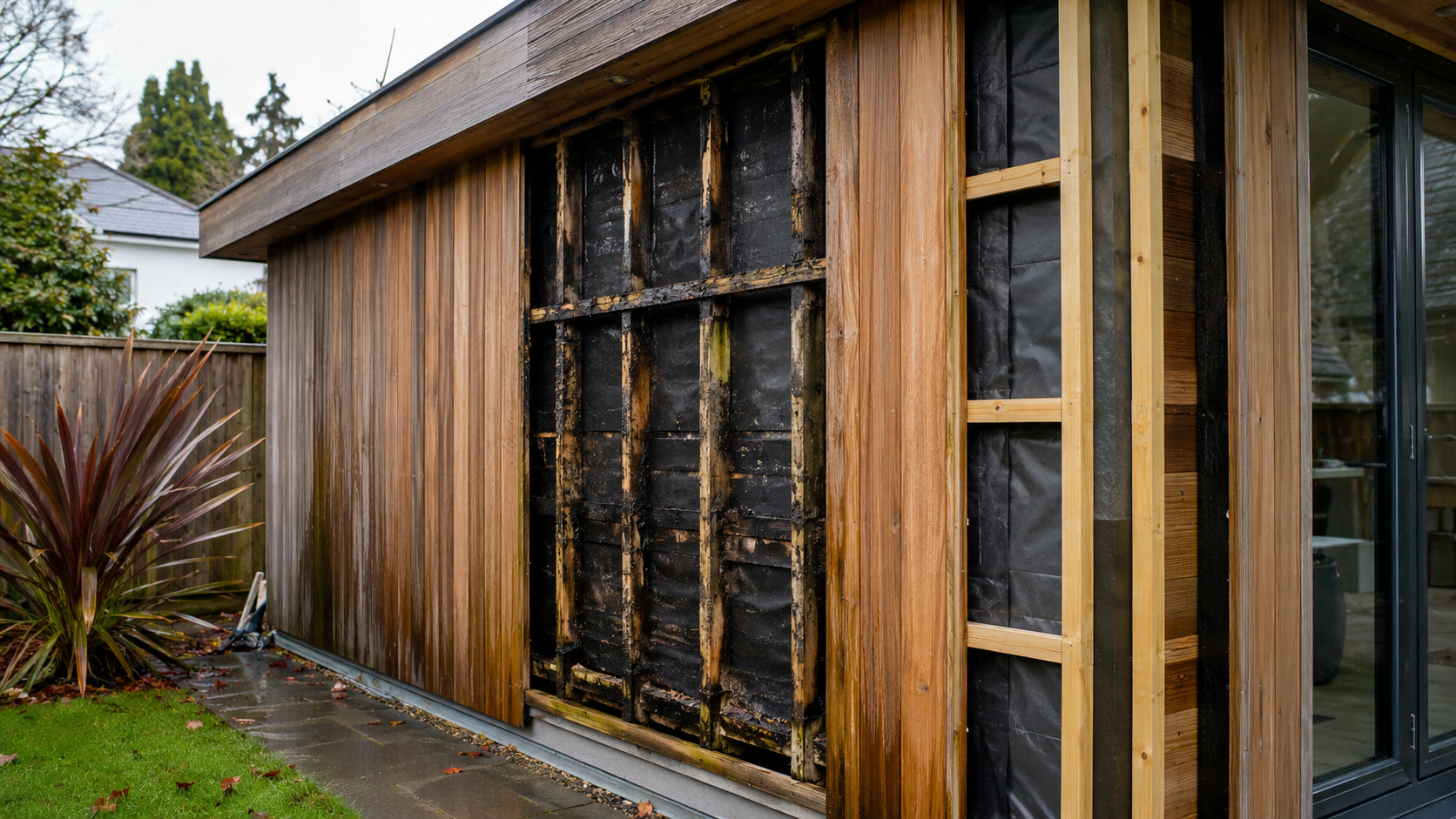
During the summer, the sun bakes that cheap tar until it turns brittle and cracks. Then the winter rain gets right into those cracks, rots the timber deck underneath, and the nails start to pull loose.
The Coastal Wind Problem
Down here on the South Coast, the wind is brutal. When a storm hits a flat roof, the wind looks for any weak spot.
A couple of loose nails on a brittle felt roof is all it takes. The wind gets straight under the overlapping seam, catches it like a parachute, and rips the entire sheet clean off the wood. Suddenly you have a felt roof leaking shed, and your plastered ceiling inside is caving in from the rain.
The EPDM Reality
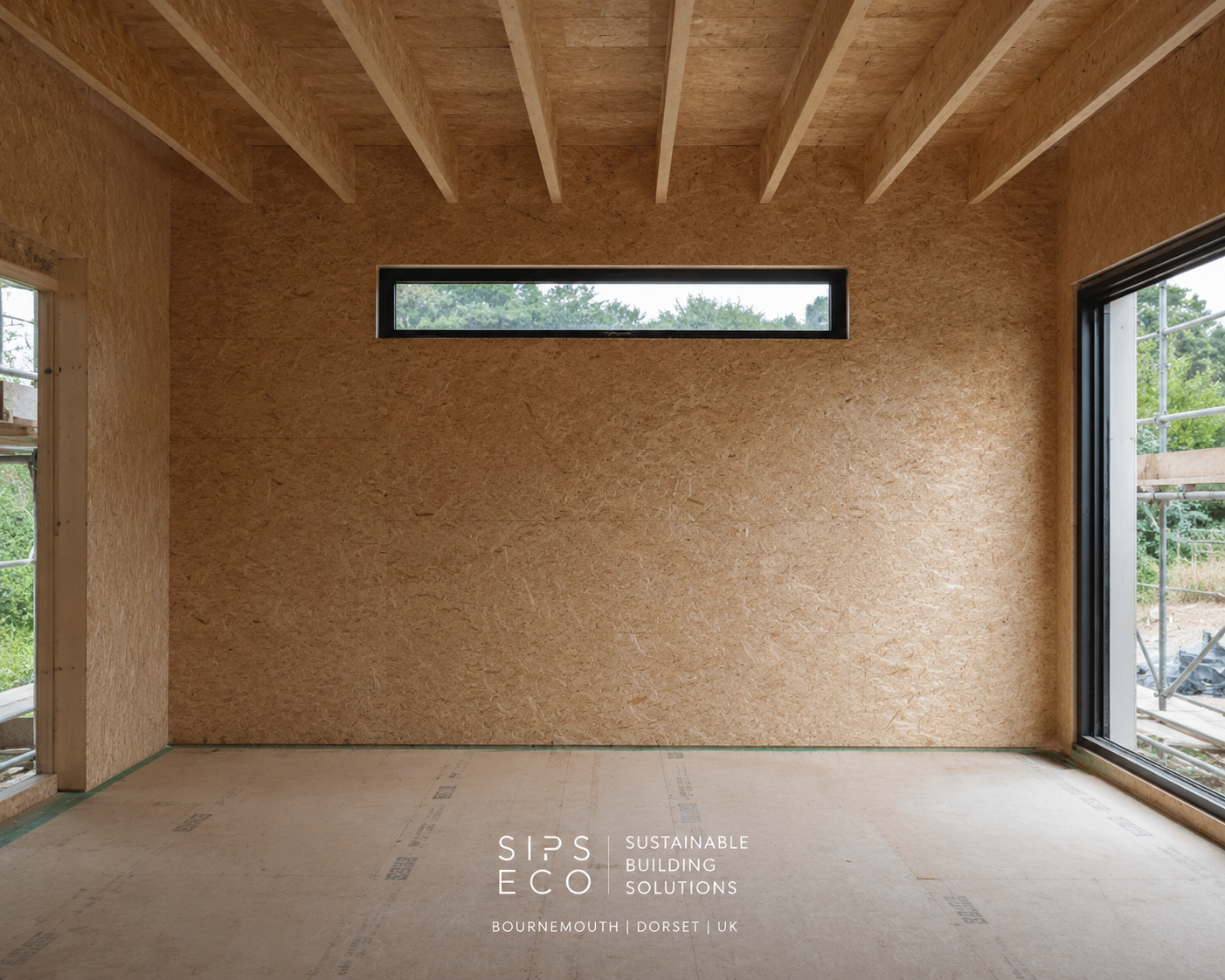
We don't touch roofing felt. Ever. We build heavy-duty SIPs studios, and we waterproof them using EPDM.
EPDM is a massive, single piece of industrial-grade synthetic rubber. There are no strips. There are no overlapping joints. There are no seams for the wind to catch.
More importantly, we don't nail it down. We coat the entire structural roof deck in a cold-applied contact adhesive and bond the rubber flat to the wood. It is physically glued down across the entire surface area. The wind cannot get under it.
Locking Down the Edges
Once the rubber is bonded, we don't just fold it over and leave it. We lock the entire perimeter down tight using proper architectural plastic edge trims. The water rolls straight off the rubber and into the guttering.
A cheap felt roof might last you three or four years before you are up there patching it. A proper EPDM rubber roof garden room is rated to sit there, taking an absolute beating from the coastal weather, for up to fifty years without letting a single drop of water through.
Do not risk thousands of pounds of tech under a cheap bit of tar paper.
Pop down and see the lads at 78 Alma Rd, Bournemouth BH9 1AN, UK, or ring the site phone on 07835 390845. We’ll show you the rubber we use and prove why it actually stays put.