The Planning Permission Driveway: When £50k of Paving Becomes a Council Problem
Rip out a front garden and replace it with 80m² of impermeable driveway and the rain still has to go somewhere. Poor drainage can create more than puddles — it can also turn your expensive new driveway into a planning problem.
You've got a big front garden in Bournemouth.
Grass comes out. Borders disappear. Eighty square metres gets turned into a smart new driveway.
Looks fantastic.
There's just one question nobody bothered asking.
Where's the rain going?
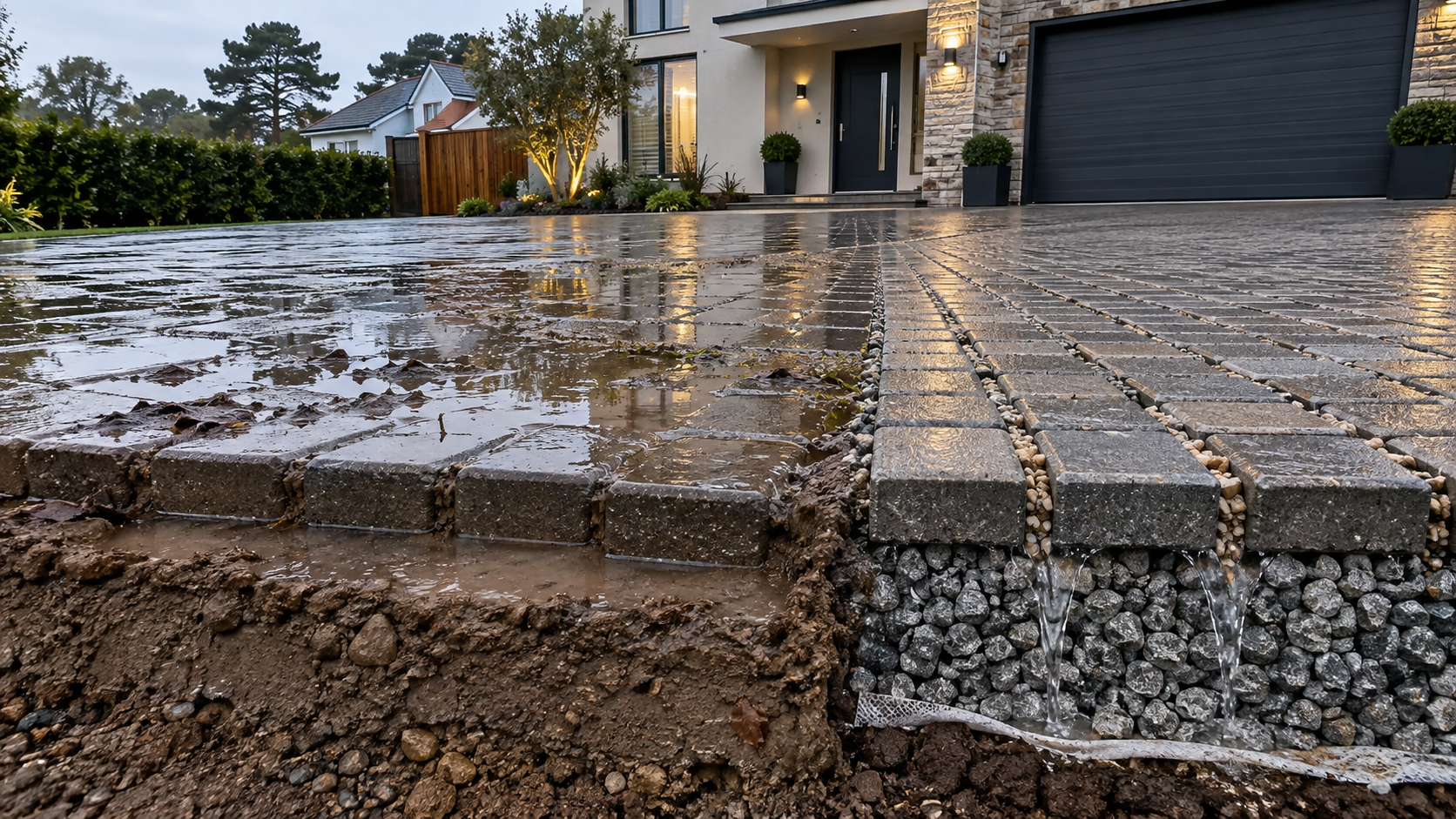
You've just replaced eighty square metres of soil and planting with something water can't easily get through. When a proper Dorset downpour lands on it, that water doesn't magically disappear.
And depending on how that driveway has been designed, you've potentially created a planning problem as well.
Five Square Metres Matters
People assume you can do whatever you like with the front garden because it's your property.
Not quite.
For houses in England, permeable driveway surfaces can generally be installed without planning permission under permitted development rules.
An impermeable surface can also work without a planning application where the runoff is properly directed into a permeable area within the property.
But cover more than 5m² with traditional impermeable surfacing without providing for that water to drain into a permeable area and planning permission can be required.
Five square metres isn't much.
We're regularly talking about driveways many times that size.
That's why drainage shouldn't be something somebody remembers once the resin, blocks or paving are already down.
Where Do You Think the Water Goes?
Forget the planning rules for a minute.
Think about the physical problem.
Rain used to land across grass, soil and planting.
Now it's landing across a large hard surface.
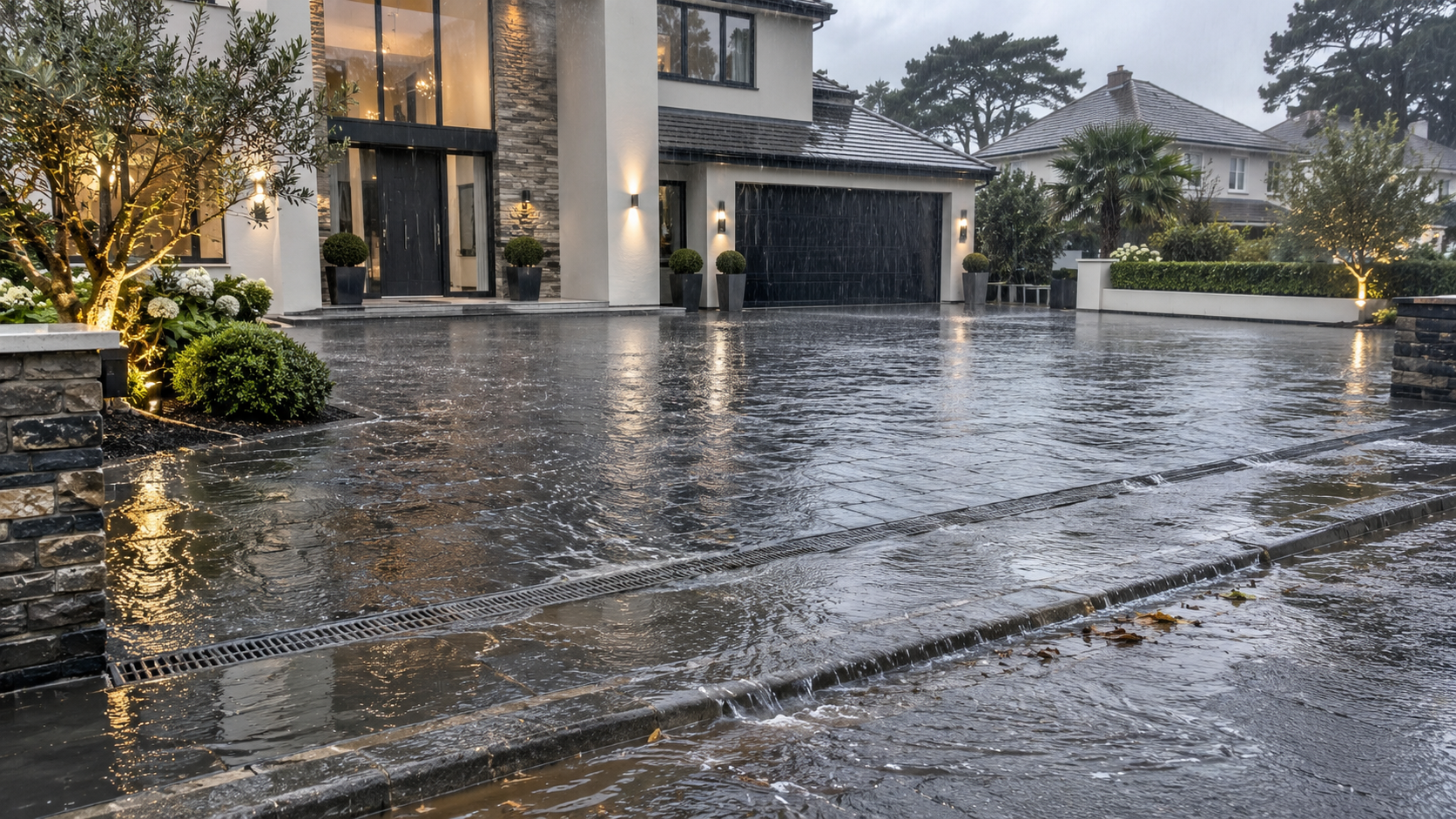
If the driveway can't absorb it, the water has to travel somewhere.
Get the falls wrong and it can head towards the house.
Send it the other direction and it can pour across the pavement or towards the road.
Neither is particularly clever.
A proper driveway design needs to control that water. Depending on the site, that could involve a genuinely permeable paving system or directing runoff into suitable drainage or permeable landscaping.
The answer depends on the ground, levels and driveway.
What doesn't work is pretending the water isn't coming.
A Channel Drain Doesn't Fix Every Bad Design
This is another shortcut.
Huge impermeable driveway.
Stick a channel across the bottom.
Job done.
Except drainage isn't just about buying a plastic channel.
Where does that channel discharge?
How much water is coming off the driveway?
What happens during sustained heavy rain?
What's underneath the drive?
Where are the finished levels compared with the house, pavement and neighbouring properties?
Those decisions need making before the driveway is built.
Otherwise you've spent £50,000 creating a beautiful surface and left the most important bit to chance.
Design the Driveway Before You Dig It
This is why proper driveway construction starts before the digger arrives.
We want to know the finished surface, levels, ground conditions and drainage strategy.
We also want to know whether the proposed work needs permission before somebody tears the front garden apart.
BCP Council itself advises homeowners to check whether planning permission is required before starting work.
That's considerably easier than asking the question once you've got eighty square metres of finished driveway sitting outside the house.
Because the expensive bit isn't always putting the driveway down.
Sometimes it's discovering afterwards that it should never have been built that way in the first place.
Stop letting cheap builders ruin your property. Pop down and see the lads at 78 Alma Rd, Bournemouth BH9 1AN, UK, or ring the site phone on 07840 151036.