The Summer Oven: Why Timber Frame Summerhouses Boil (And How SIPs Work)
Is your garden office a sweatbox in July and a freezer in December? Discover the structural physics of thermal bridging, the truth about cheap insulation, and why SIPs are the only way to build a truly usable, year-round space.
Every year, right around the second week of July, the phone rings.
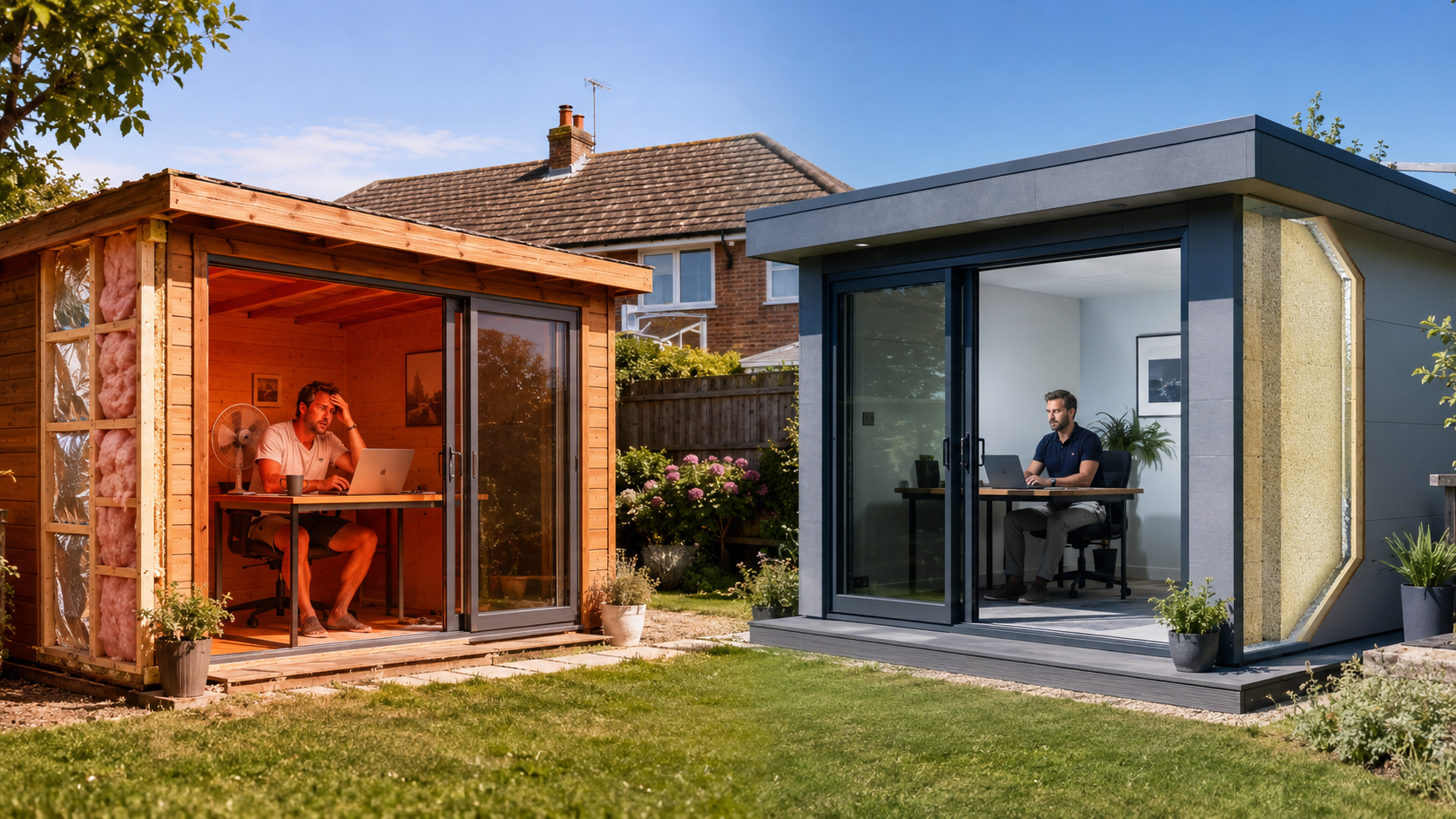
Someone dropped ten grand on a timber garden office from one of those massive online shed companies. They drag their laptops down the garden, plug the screens in, and try to get a shift done. Come eleven o'clock? They're dripping with sweat. You can't even think in there, let alone work. They ring me up begging to retrofit aircon.
I have to tell them straight: you didn't buy an office. You bought a massively overpriced wooden greenhouse. And wait until December, that exact same box turns into a walk-in freezer.
If you’re wondering "why is my garden room so hot?", look at the bones of the building.
The Problem with 2x4s and Foil
Most garden rooms on the market are just glorified sheds: a standard 2x4 timber frame. To try and pass it off as a "habitable space," the builders chuck some cheap fiberglass wool or thin foil boards between the studs, slap some plasterboard up, and call it thermally efficient.
It’s absolute rubbish.
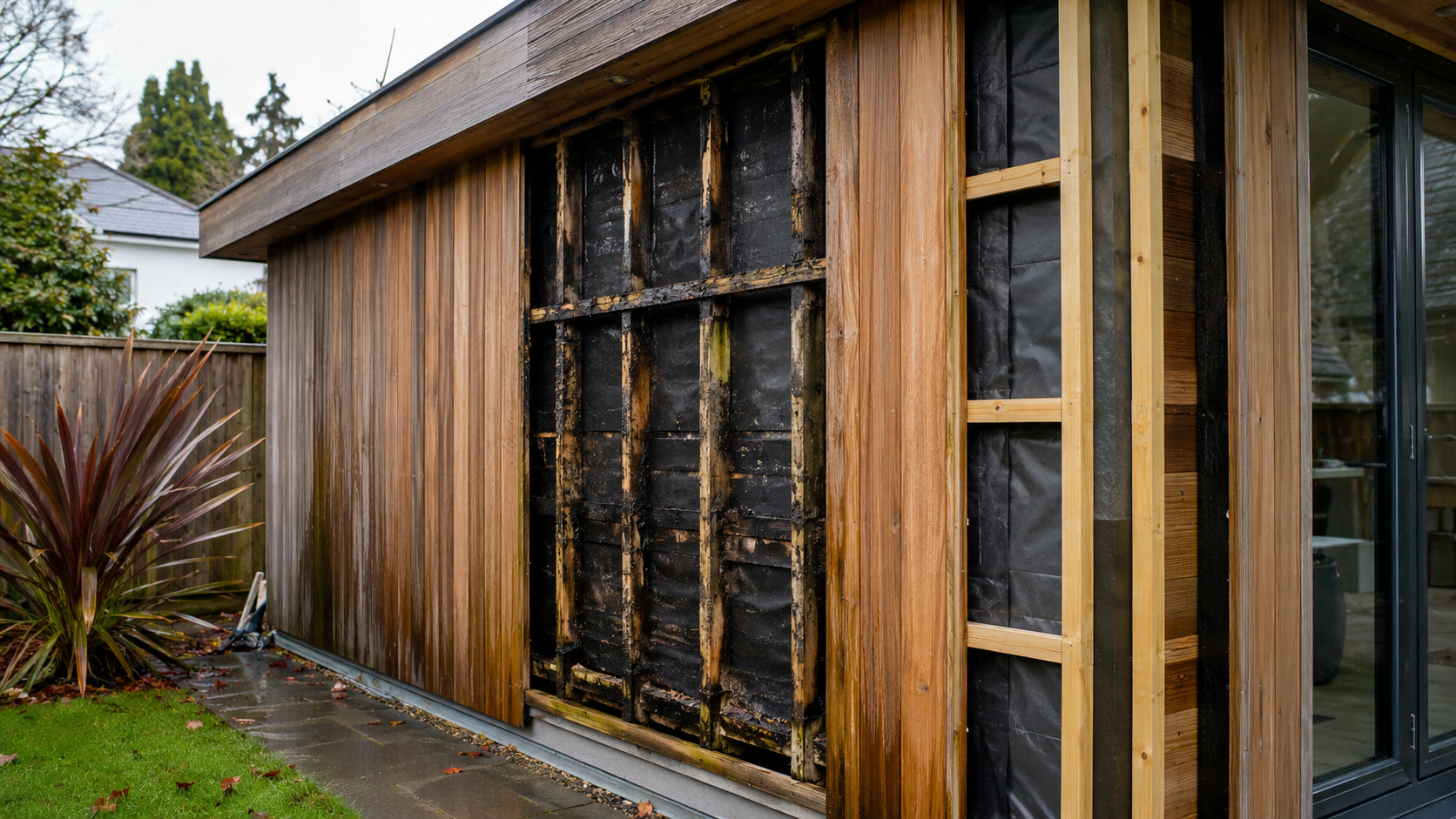
First off, wood is a terrible insulator. Every wooden stud in that wall acts like a bridge. The sun bakes the outside cladding, the heat travels straight through the timber, and radiates right into your room. We call this "thermal bridging."
Secondly, stuffing rigid boards between timber battens is a joke. Leave even the tiniest gap around those boards—just a couple of mil—and it’s game over. Summer heat gets straight in. Winter heating goes straight out. You might as well stand in the garden and burn your cash.
Enter SIPs (How We Actually Build)
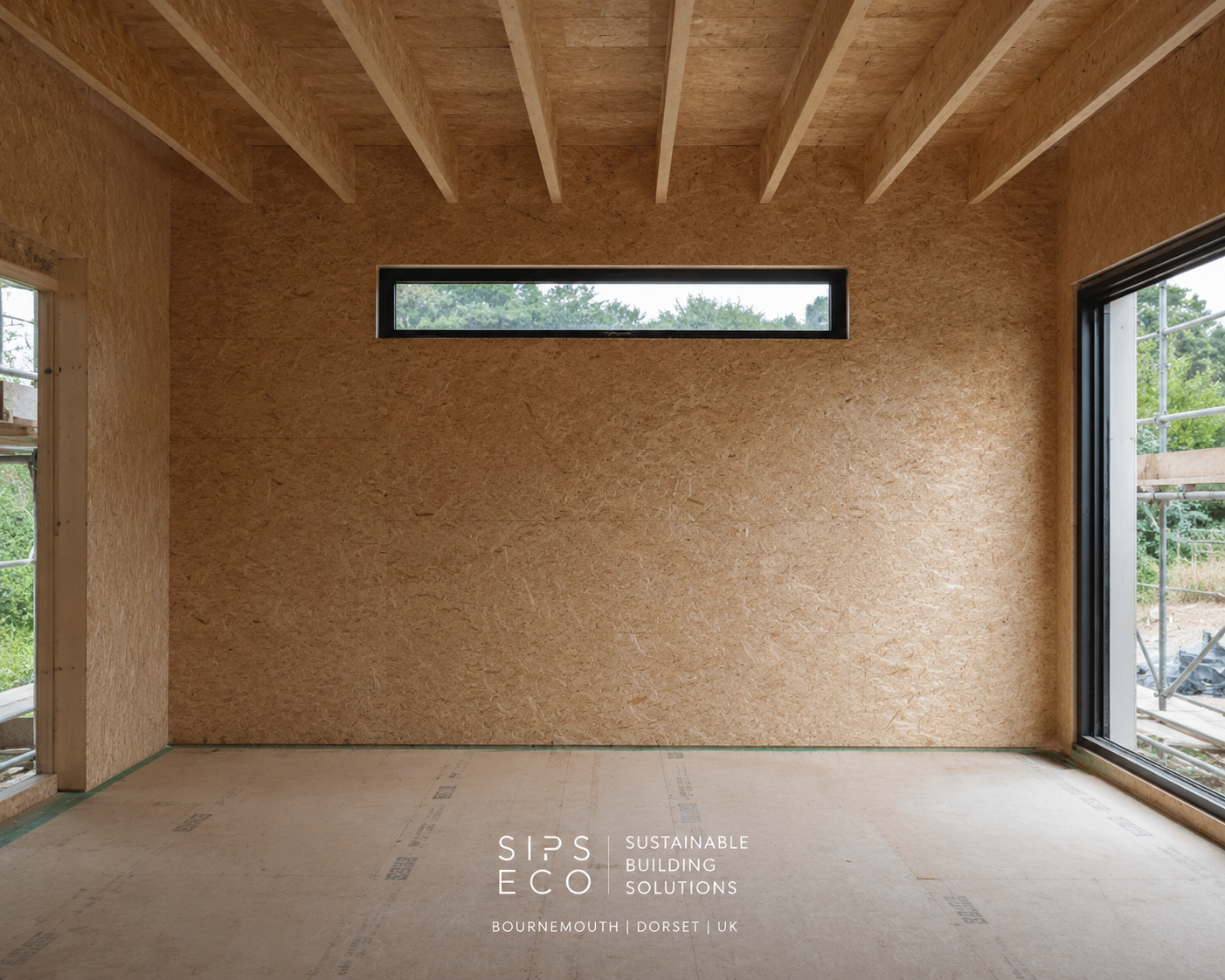
At GW Landscaping+, we don't build timber sheds. We build with SIPs. That means Structural Insulated Panels. Basically, it's a solid block of high-grade foam glued tight between two thick sheets of structural board under massive pressure.
When we lock these together to form your studio, there is no timber stud every 400mm letting the heat in. No drafts. The insulation is continuous, solid, and structurally bulletproof.
U-Values
If you are getting quotes for premium garden studios around Poole or Bournemouth, you need to ask about U-values.
Ignore the sales patter. A U-value is just a score for heat loss. Lower is better. End of. Your standard posh shed from the internet? You’ll be lucky if it gets a U-value of 0.35.
Our heavy-duty SIPs builds? We’re hitting 0.18 or lower. We are basically matching the thermal regs of a brand-new brick house.
Breathing Room: Why Airtight Isn't Enough
A proper SIPs build is fully airtight. That’s what stops the July heat baking you alive. You can't just build a completely sealed box, though. Do that, and within a week the place will stink of damp and the windows will be streaming with condensation.
That’s why true climate control takes actual engineering. We pair our builds with breathable wrapping membranes, trickle vents, and mechanical airflow systems. The building breathes exactly how it’s supposed to, keeping the air fresh without ruining the temperature.
Stop wasting your money on a timber sweatbox you can only use three months of the year.
Pop down and see us at 78 Alma Rd, Bournemouth BH9 1AN, UK, or ring the site phone. We’ll show you the panels we use and prove why they actually work.