The Cracked Garden Wall: Why Render Can't Hide Bad Blockwork
That hairline crack in your new rendered garden wall keeps coming back for a reason. Bad foundations, trapped water and moving blockwork won't be fixed with filler and another coat of paint.
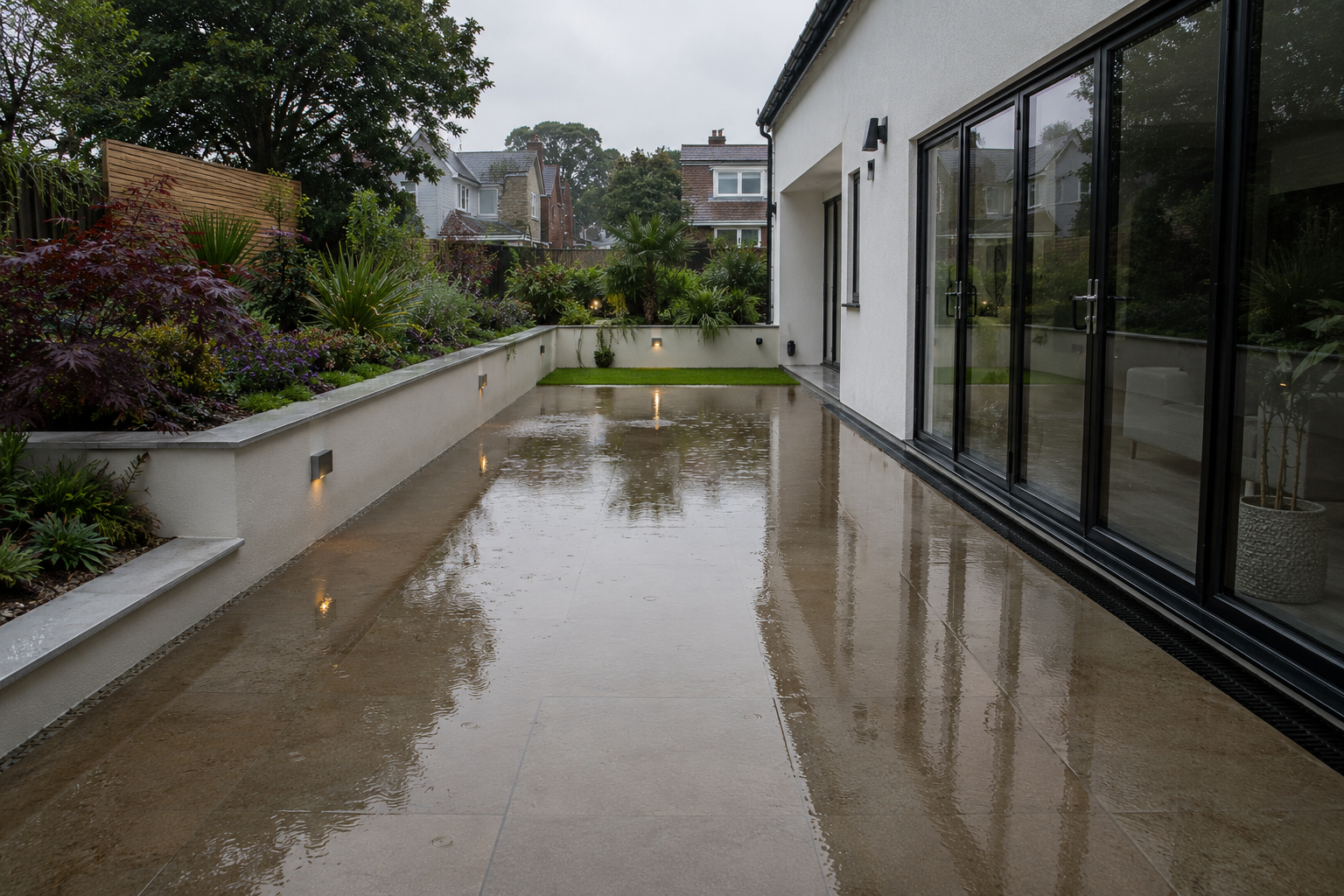
Fresh white render.
Dead straight coping stones. New porcelain underneath it. Maybe some lighting tucked along the bottom.
Looks expensive.
Then a little hairline crack appears.
Builder comes back with some filler and a pot of paint.
"Just settlement, mate."
Six months later the crack is back.
Only now it's wider.
That's because the render wasn't the problem in the first place.
It's just showing you what's happening to the wall underneath it.
Paint Doesn't Hold a Wall Together
Render is a finish.
It isn't structural.
If the blockwork underneath starts moving, the render moves with it.
Eventually it cracks.
You can grind the crack out, fill it, repaint the whole wall and make it disappear.
For a while.
But if the wall underneath is still moving, it'll simply crack again.
That's why repeatedly repairing a cracked rendered garden wall without finding the cause is a waste of time.
You're decorating a structural problem.
What's Under the Wall?
Start at the bottom.
A proper garden wall needs a foundation capable of carrying its weight and dealing with the ground underneath it.
That's where cowboys save time.
Dig a shallow trench. Chuck some concrete in. Start laying blocks.
Looks exactly the same once it's rendered.
Until the ground gets soaked through winter.
If one section of that foundation moves even slightly, the blockwork above it has to move as well.
Now you've got the classic diagonal crack running through the render.
Another tub of filler isn't putting the foundation back where it belongs.
A Retaining Wall Isn't Just a Big Garden Wall
This is where things get more serious.
There's a massive difference between a decorative wall around a patio and a wall holding back tonnes of soil.
Wet soil is heavy.
Really heavy.
After days of rain, the ground behind a retaining wall becomes saturated and starts pushing against it.
That pressure doesn't politely disappear.
If the wall wasn't designed to handle it, something eventually gives.
You start seeing cracks.
The wall develops a belly.
Coping stones move.
In worse cases, the whole thing starts leaning towards the patio.
Someone has basically built a decorative block wall and asked it to hold half the garden back.
It won't.
Water Behind the Wall is the Killer
You also need to deal with the water.
Build a solid wall in front of wet ground with nowhere for that water to escape and you've created a problem.
Every downpour adds more pressure behind it.
That's why proper retaining work needs drainage considered as part of the construction.
Depending on the job, that can mean drainage stone, suitable membranes, drainage pipework or outlets to get water away.
You want to relieve that pressure.
Not trap it behind some freshly rendered blocks and hope for the best.
Sometimes Walls Need to Move
Long runs of masonry can also need properly positioned movement joints.
Materials expand.
They contract.
Ground moves slightly.
Temperatures change.
Ignore that completely and the wall will often make its own movement joint.
It's called a crack.
Again, painting over it doesn't change what's happening underneath.
Fix the Wall, Not the Crack
When we see garden wall cracks in Dorset, we're not immediately reaching for filler.
We want to know why it cracked.
What's underneath it?
What's behind it?
Is it retaining anything?
Where's the water going?
Is the blockwork moving?
Because there's no point spending good money making the render look new if we're going to be staring at the same crack next winter.
The finished wall should look simple.
Straight blockwork. Clean render. Nice coping.
It's everything hidden underneath and behind it that keeps it looking that way.
Stop letting cheap builders ruin your property. Ring the site phone on 07840151036